Tuesday

Writing Tasks

UNIT 1                                                                                          .
WRITE ABOUT YOURSELF
Name / country / year in school / activities you do
UNIT 2
WRITE ABOUT A PLACE
Name / country / When you go / Who you go with / What do you do there
UNIT 3
DESCRIBE A PERSON
Name /  hair / eyes / clothes / personality / something he or she likes doing
UNIT 4
WRITE ABOUT A COURSE
Course / place / days / time / I go with / things we do
UNIT 5
WRITE ABOUT A PAST EVENT
When? /  Where? / Who? / What?
UNIT 6
A STORY
What? / Who? / When? / Where? / 
UNIT 7
DESCRIBE A GAME
Name of the activity / players / starting / rules 
UNIT 8
DESCRIBE A TRIP
Name of trip / transport / things to see / things to learn / things to visit 
UNIT 9
DESCRIBE A RECYCLING PROCESS
Name of material / new product / how people make it / how it helps the environment


Saturday

Describing Words

Enter a noun into this website and get a range of words to help you describe it. Superb for creative or descriptive writing projects.


Contrast Words

The words although, though, despite, in spite of and however have very similar meanings; however, they are used in different structures.

Though and although are conjunctions. They go before a clause.

Despite and in spite of are prepositions. They go before a noun or noun equivalent.

 However is a transitional adverb. It goes at the beginning of a sentence.

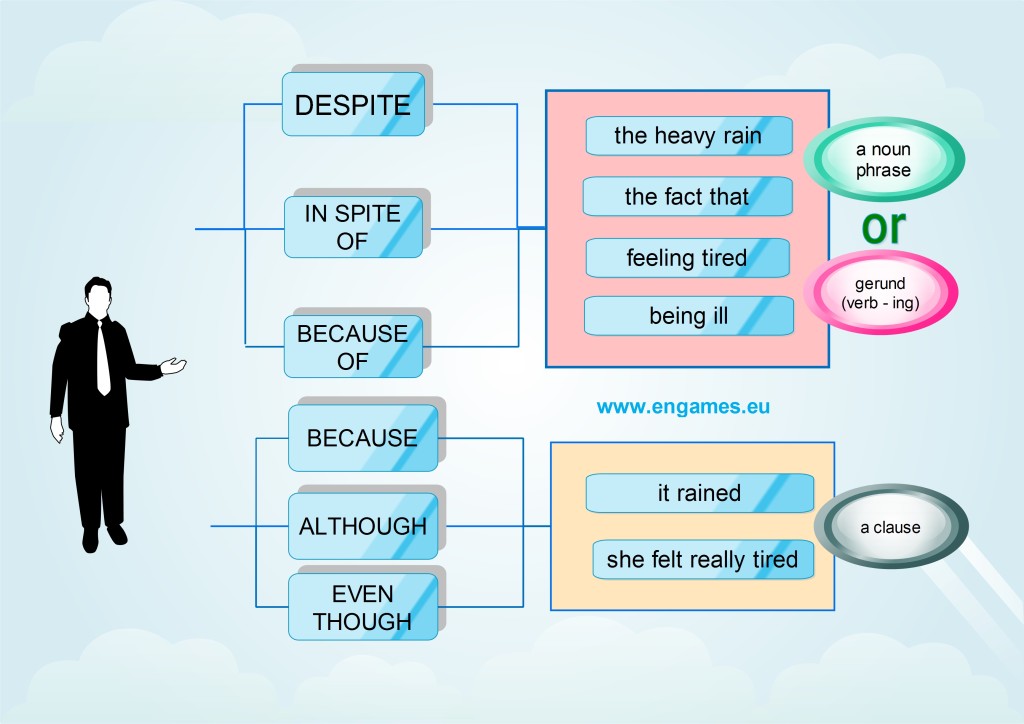
To cut the explanation short, the words DESPITE, IN SPITE OF and BECAUSE OF are followed by a noun phrase or a gerund (verb + ing).

Despite the rain, they went to the beach.
In spite of the rain, they went to the beach.
They didn't go to the beach because of the rain.

The conjunctions BECAUSE, EVEN THOUGH and ALTHOUGH are followed by a clause.

Although it rained, they went to the beach.
Even though it rained, they went to the beach.
Because it rained, they didn't go to the beach. 
You can see the explanation again in the following mind map:


Grammar & exercise       Exercise 2


but

 (bʌt; unstressed bət)  conj (coordinating)
1. contrary to expectation: he cut his knee but didn't cry.
2. in contrast; on the contrary: I like opera but my husband doesn't.
3. (usually used after a negative) other than: we can't do anything but wait.

conj (subordinating)
4. (usually used after a negative) without it happening or being the case that: we never go out but it rains.
5. (foll by that) except that: nothing is impossible but that we live forever.
6. archaic if not; unless

sentence connector
informal used to introduce an exclamation: my, but you're nice.

prep
7. except; save: they saved all but one of the pigs.
8. but for were it not for: but for you, we couldn't have managed.
adv
9. just; merely; only: he was but a child; I can but try.
10. informal Scot and Austral and NZ though; however: it's a rainy day: warm, but.
11. all but almost; practically: he was all but dead when we found him.
noun
an objection (esp in the phrase ifs and buts)

although

 – though
1. used as conjunctions
You use although or though to introduce a subordinate clause in which you mention something that contrasts with what you are saying in the main clause. Though is not used in very formal English.
I can't play the piano, although I took lessons for years.
It wasn't my decision, though I think I agree with it.
You can put even in front of though for emphasis.
She wore a coat, even though it was a very hot day.
Don't put 'even' in front of although.
Be Careful!
When a sentence begins with although or though, don't use 'but' or 'yet' to introduce the main clause. 
Don't say, for example, 'Although he was late, yet he stopped to buy a sandwich'. You say 'Although he was late,
he stopped to buy a sandwich'.
Although he was English, he spoke fluent French.
Though he hadn't stopped working all day, he wasn't tired.
Be Careful!
Don't use although or though in front of a noun phrase. Don't say, for example, 'Although his hard work, he failed his exam'. You say 'In spite of his hard work, he failed his exam' or 'Despite his hard work, he failed his exam'.
In spite of poor health, my father was always cheerful.
Despite her confidence, Cindy was uncertain what to do next.

2. 'though' used as an adverb
Though is sometimes an adverb. You use it when you are making a statement that contrasts with what you have just said. You usually put though after the first phrase in the sentence.
Fortunately though, this is a story with a happy ending.
For Ryan, though, it was a busy year.
In conversation, you can also put though at the end of a sentence.
I can't stay. I'll have a coffee though.
Although is never an adverb.

Thursday

Connectives Games

Today we take a look at some words that you can use to link connect short sentences together. Exercise.

Spin the wheel and write a sentence using the selected connective.


Examples of connectives/conjunctions

Sunday

Both, Either & Neither


To learn more, click on the pic below


Describing Trends

Learn more


Thursday

For and Against Essays


CLICK THE IMAGES BELOW IF YOU WANT TO LEARN MORE


Ex 1      Ex 2

Writing 

Essay writing gap-fill exercise: Has new technology had a positive or negative influence on our lives?


Powered by emaze


Sunday

Don'ts

Sunday

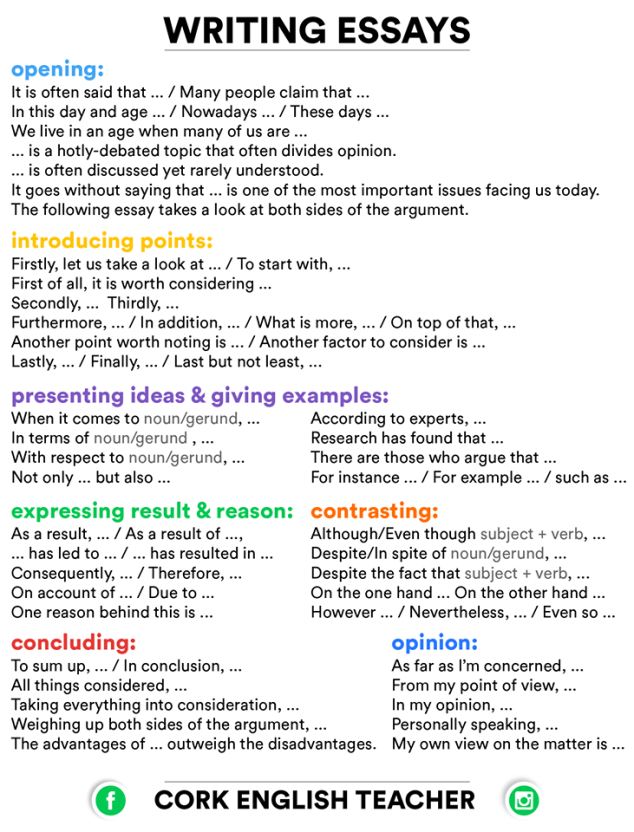
Writing Opinion Essays

An opinion essay is a formal piece of writing. It requires your opinion on a topic, which must be stated clearly, giving various viewpoints on the topic supported by reasons and/or examples. You should also include the opposing viewpoint in another paragraph.


Saturday

Tips for the Writing Exams (Level B2)


Continue reading here

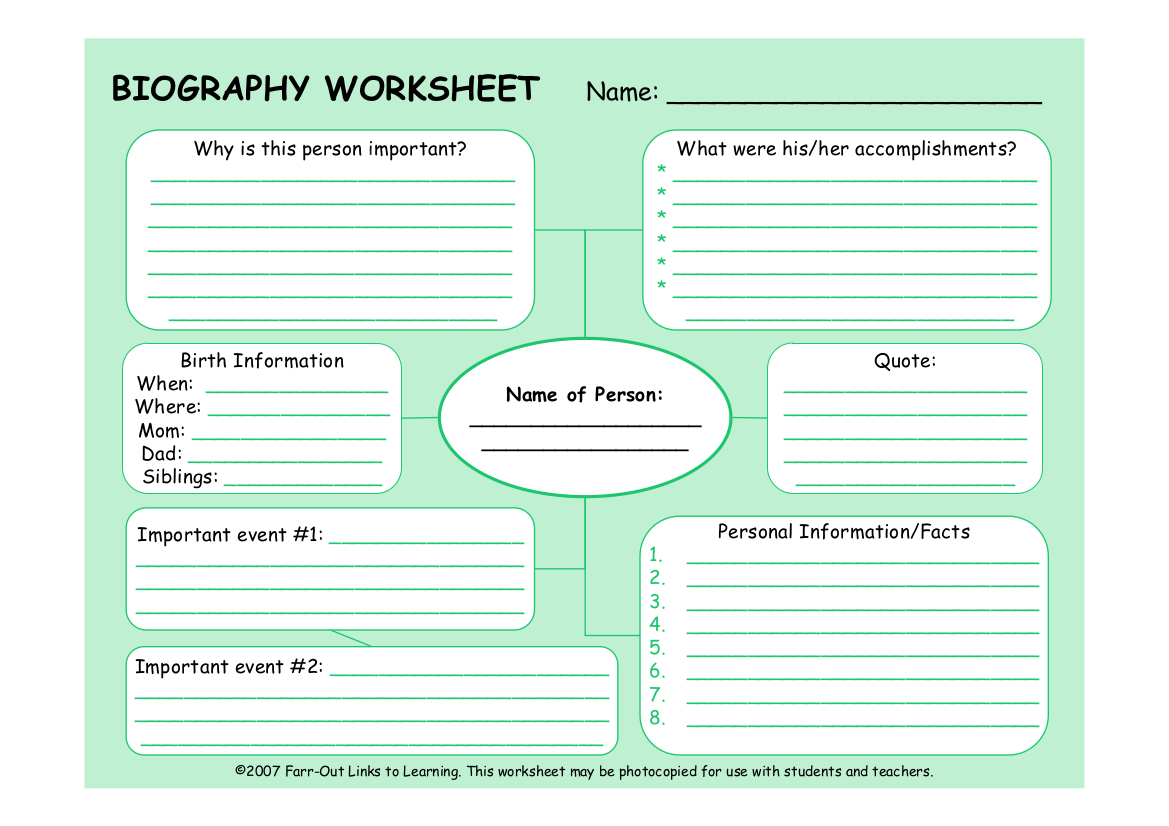
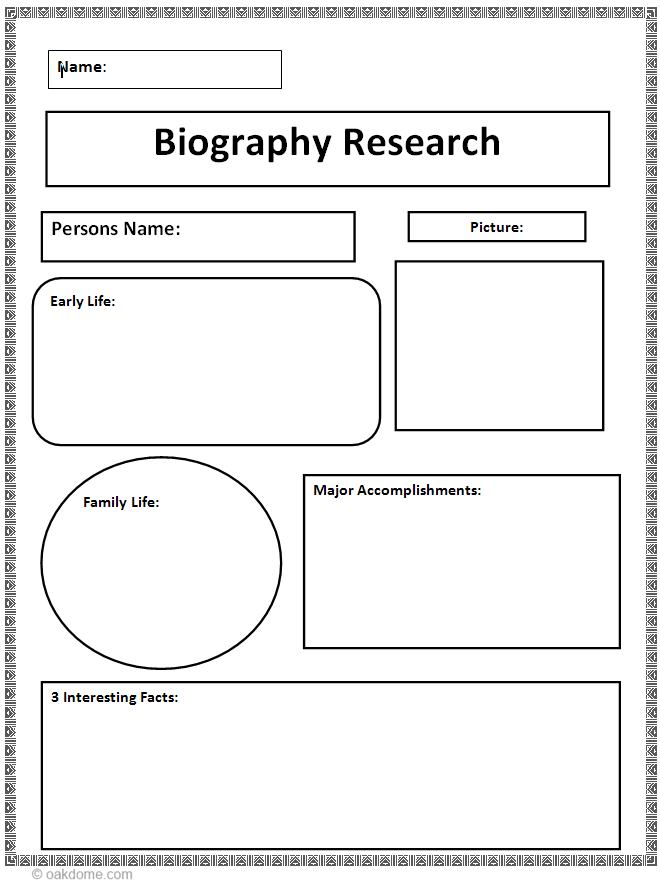
Writing a Biography

A biography is the story of a person's life. It includes details of the person's life. It generally follows a specific chronological order:

  1.  General Background
  2.  Childhood/adolescence
  3. Education
  4. Family life
  5.  Career (achievements, failures, events, setbacks)
  6. (end of life and death)
  7. Conclusion and personal opinion.

In order to show the chronological sequence, we often give the actual dates of events and use time expressions such as before, after, at the same time, while, for, since, later, during this period....
Linking words are also useful to show the relationship between events or factors that have influenced a person's life.
Connectors such as although, despite, as well as, besides, not only... but also, therefore, because, as a result, etc, can be used to improve the quality of the biography you write.

FREQUENT PHRASES AND STRUCTURES

1. General background
 ⇰He/she was born in ……………(place), on………….. (date, ordinal)
“Malvin Wetey was born in Wales on the third of April 1989”
“Melissa Badley was born in Merridon, Scotland in 1995”
⇰ He/she belonged to a - rich/wealthy family # poor/humble family.
- a family of humble origins. / of noble lineage
- big/large family / small family.
⇰ He/She was part of a - working class / middle class/ ruling class family
- cultured # ignorant/illiterate family.
⇰He/She was brought up - in an urban/ country/ context
- in very harsh conditions / privileged conditions
- by a ……………. family.
2. Childhood / adolescence
⇰  At a very early age, he/she started working hard in a factory
⇰ At the age of 4, Mozart played the piano perfectly.
⇰  When she turned 18, she left home to start a new life by herself.
⇰  During his childhood, Amstrong was riding his bike for 5 hours every day
⇰ By the time she was 18, Sara had already travelled to 14 different countries

3. Education
⇰ He went on with his/her studies at school/university.
⇰ Sam was a(n) lazy/hard-working/brilliant/average student.
⇰ He was very good at Art and Literature
⇰ Barbara was skilled in Mathematics.
⇰ She always got the highest/lowest marks in the class
⇰ Ralph went successfully through his studies and graduated in Sociology.
⇰ His academic performance was very satisfactory/outstanding # poor
⇰ Sandra got a degree in Law

4. Family life
⇰When he was 34 he got married and had 5 children.
⇰ She decided to stay single and lead her own life.
⇰ Phil married the girl of his dreams, but after a few years of happy marriage, things started to go wrong.
⇰ Before she married Adam she had dated many other men.
⇰ After having her first baby, she became far more understanding.
⇰ He shared his life with his wife and their 3 children.

5. Career ( achievements, failures, events, setbacks )
⇰ He spent a lot of years of his life fighting for the human rights.
⇰During his lifetime, he did his best to improve the living standard of poor people
⇰He devoted much of his time to travel to different places and to know other cultures.
⇰After a long period of happiness and success, he suddenly......
⇰His/her life was full of achievements, although he also experienced some serious setbacks.

6. End of life and death.
⇰He died at the age of ………,
⇰ He died of natural causes/ of a ……… (disease, heart attack, for instance).


Time Expressions for Biography Quiz

Linking Words in Narratives Quiz

Friday

Sequencing a Story


Hello, I'm Bart and I had a great birthday yesterday. 1First / Next, I met my friends at the shopping centre and they bought me a present. 2 Then / Finally, we had pizza at a café. 3 Finally / Next, we went to the cinema and saw a very funny comedy. 4Then / First suddenly, my parents arrived. They took me to an amazing restaurant for dinner.5 Next / Finally, we went home and I went to bed, tired but happy.


SEQUENCING QUIZ

Provide an appropriate sequencing word to fill in the gaps:

My friend and I visited Rome last summer. (1) ________, we flew from New York to Rome in first class. It was fantastic! (2) _________ we arrived in Rome, we (3) ______ went to the hotel and took a long nap. (4) ________, we went out to find a great restaurant for dinner. (5) ________, a scooter appeared out of nowhere and almost hit me! The rest of the trip had no surprises. (6) __________, we began to explore Rome. (7) ________ the afternoons, we visited ruins and museums. At night, we hit the clubs and wandered the streets. One night, (8) ________ I was getting some ice-cream, I saw an old friend from high school. Imagine that! (8) _________, we caught our flight back to New York. We were happy and ready to begin work again.


Multiple answers are possible for some gaps:
  1. First of all / To start off with / Initially / To begin with
  2. As soon as / When
  3. immediately
  4. Then / After that / Next 
  5. Suddenly / Unexpectedly 
  6. Then / After that / Next 
  7. During
  8. while / as 
  9. Finally / In the end / Eventually